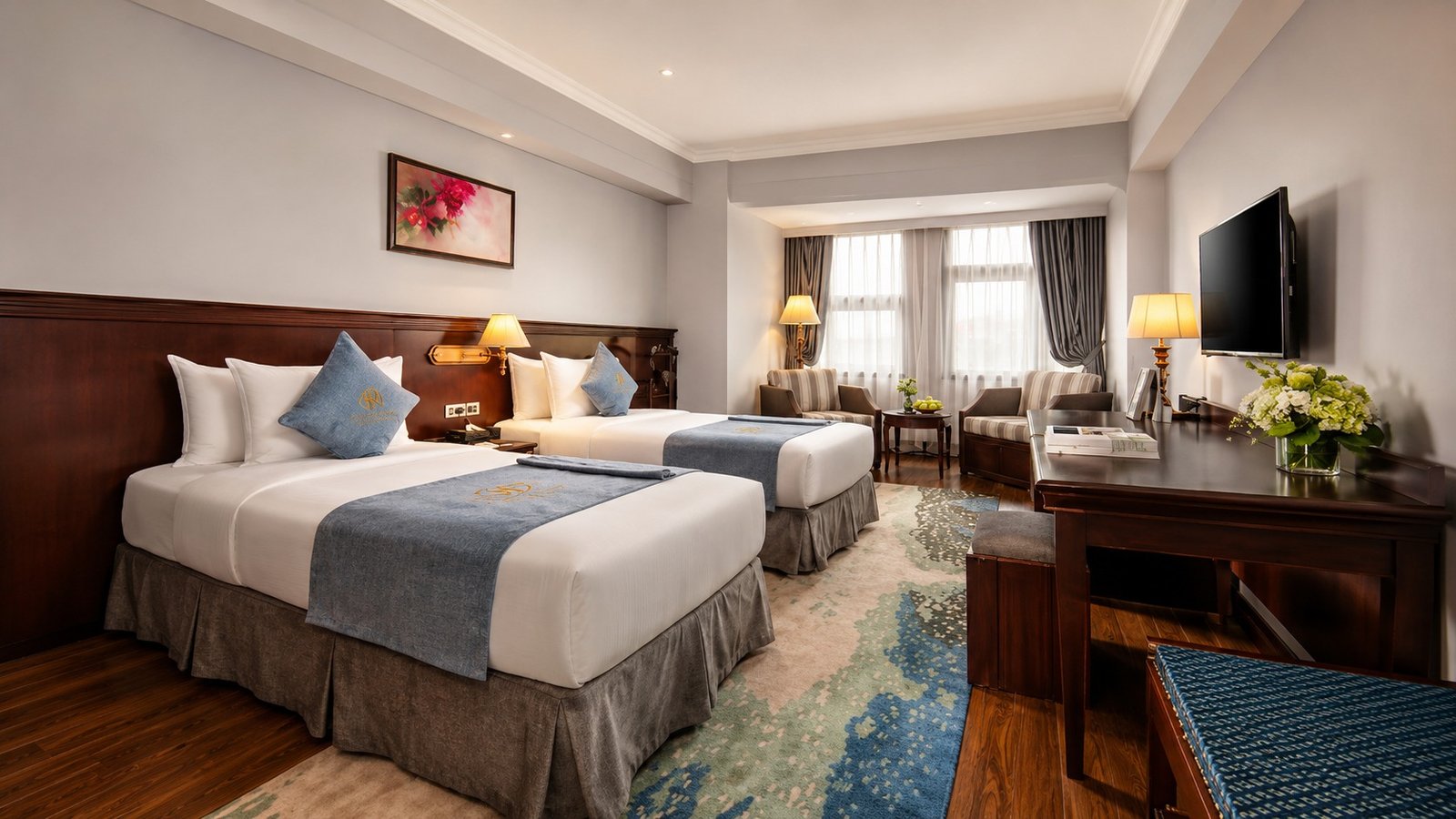
Booking sites rate hotels for sleeping and swimming. Nobody rates them for trading a New York open. We check rooms for that before we put a trader in them, and this is the list we use. It works for any hotel, anywhere, though the examples are from Vietnam.
What does a hotel room need for trading?
A connection that is stable in the room itself, a desk at the right height with a proper chair, power sockets within reach of the desk, good light, aircon you can control, and quiet during your session hours. A pool and a view are nice; none of them matter if the Wi-Fi drops at the open.
| Check | Good enough | Red flag |
|---|---|---|
| Download speed (in room) | 20+ Mbps | Strong in lobby, weak in room |
| Upload speed | 5+ Mbps | Under 2 Mbps |
| Ping / jitter | Steady, no spikes or drops over 10 min | Packet loss, spikes of several hundred ms |
| Ethernet port | Live port at the desk | No port, or a dead one |
| Desk and chair | Real desk, upright chair | Vanity shelf, sofa only |
| Sockets | Two or more at the desk | One socket behind the bed |
| Backup power | Building generator, router on UPS | "Power cuts are rare" and nothing else |
| Mobile signal | 3+ bars, 4G or 5G in room | One bar; hotspot useless |
| Noise during your sessions | Quiet floor, away from street | Above a bar, next to karaoke |
| Aircon | Quiet, controllable in room | Central only, or loud |
| Light | Desk lamp, window to the side | Glare on the screen, one ceiling bulb |
| Late food | Room service or delivery to the door | Nothing after 21:00 |
Speed numbers are a practical floor for charting and manual execution, not a broker requirement. Stability matters more than headline speed.
What should I ask the hotel before I book?
Email the hotel directly with five specific questions: in-room speed, ethernet, the desk, backup power and a quiet room. Vague answers ("Wi-Fi is free and fast") tell you they haven't checked.
Here is the email we'd send. Copy it, change the dates:
- "Could you run a speed test in the room type I'm booking and send me the screenshot?"
- "Does the room have a working ethernet port near the desk?"
- "Is there a full desk and an office-style chair?"
- "Does the building have a generator, and is the Wi-Fi router on backup power?"
- "I work in the evenings until midnight. Can you give me a quiet room away from the street, bar and karaoke?"
A hotel that replies with a screenshot is a hotel that will help you at 20:00 when something goes wrong.
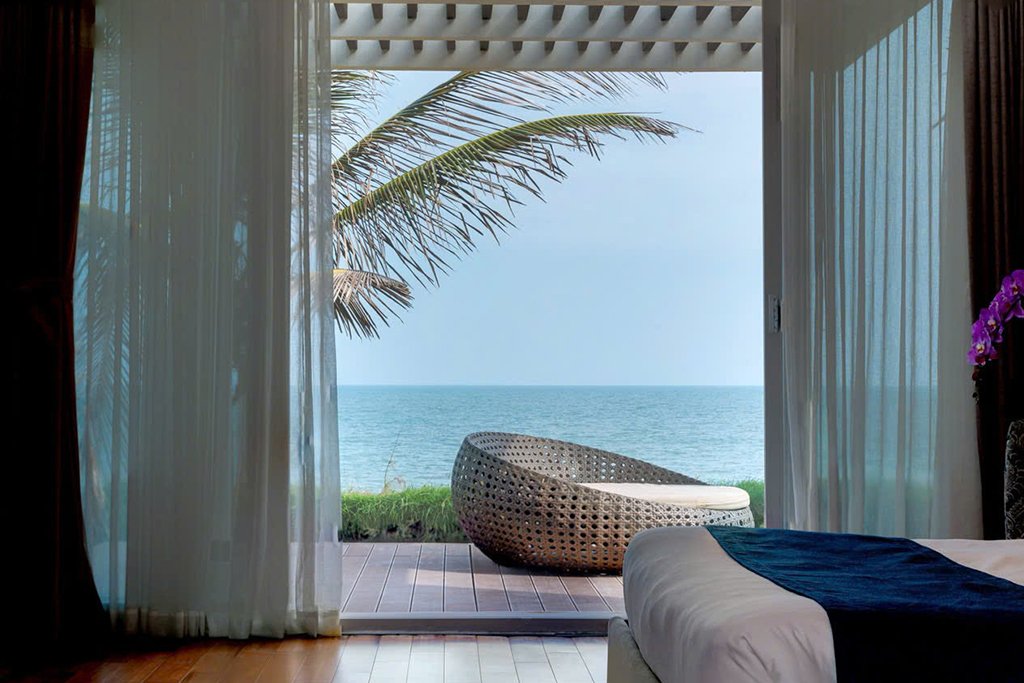
How do I test a hotel room's internet for trading?
Run a 10-minute test on arrival at the hour you'll trade: a speed test, then a continuous ping to a stable server while you watch for drops, then your platform loaded on both the hotel line and your hotspot. If either fails, ask to change rooms that evening, not the next morning.
- Speed test on Wi-Fi and, if there's a port, on ethernet.
- Ping test for 10 minutes. Watch for timeouts and spikes, not the average.
- Log in to your platform and open your usual charts; check the latency your platform reports.
- Switch to your hotspot and do it again. That's your second route.
- Find the sockets, charge everything, set the aircon so it doesn't blow on the router.
The full travel kit (adapter, power bank, portable monitor, two SIMs) is in our trading while travelling checklist.
How do I protect my trading from power cuts and Wi-Fi drops?
Keep two internet routes on two different networks, run automated strategies on a VPS, put hard stops in every position, and carry a small power bank or mini UPS that can keep a router or phone hotspot running for an hour.
In most Vietnamese cities power is reliable now, but storms in the wet season and old buildings still cause short cuts. A laptop runs on its battery; the hotel router does not. That's why a hotspot on your own SIM matters: it doesn't care whether the building has power. Our guides to eSIMs and SIM cards and Trading from Vietnam cover the setup in detail. If you trade a prop firm account, check their rules on VPS and IP changes first; see prop firm rules when trading abroad.
Is a hotel or a serviced apartment better for trading?
For a week, a good hotel: staff on hand at night, generators, room service and a room change if the first one is noisy. For a month or more, a serviced apartment: a bigger desk, a kitchen, and often a dedicated fibre line, at a lower nightly rate.
Whichever you choose, the checks in the table are the same. Coworking spaces are the third option for daytime sessions, but most close before the New York open in Asia, so you still need a room that works at night.
FAQ
What internet speed do I need to trade from a hotel?
As a practical floor, about 20 Mbps download and 5 Mbps upload measured in the room, with a stable ping and no drops over a 10-minute test. Stability matters more than headline speed for charting and order execution.
Is hotel Wi-Fi safe for trading?
It is workable, but use a mobile hotspot or a reputable VPN for broker logins and money transfers, and enable two-factor authentication. If you trade a prop firm account, check its rules on VPNs and IP changes first.
Should I ask the hotel for an ethernet port?
Yes. A wired connection is usually more stable than Wi-Fi, especially in rooms far from the router. Ask before booking, and bring a USB-C ethernet adapter, since most laptops no longer have a port.
What should I do if the hotel Wi-Fi fails during a trade?
Switch to your backup hotspot on a different mobile network, check your positions on your phone app, and rely on the hard stops you placed in advance. Ask reception for a room change the same evening.
Is a hotel or an apartment better for a trading trip?
A hotel suits a week: night staff, generators, room service and an easy room change. A serviced apartment suits a month or longer: more space, a kitchen and often a dedicated fibre line at a lower nightly rate.
The bottom line
Ask for the speed screenshot before you book, test the room in the first ten minutes, wire in if you can, and always keep a second route on your own SIM. The view is a bonus; the desk is the job.
Next: where to base yourself in Da Nang, or the full trading while travelling checklist.